

The Double-Edged Nature of Patches
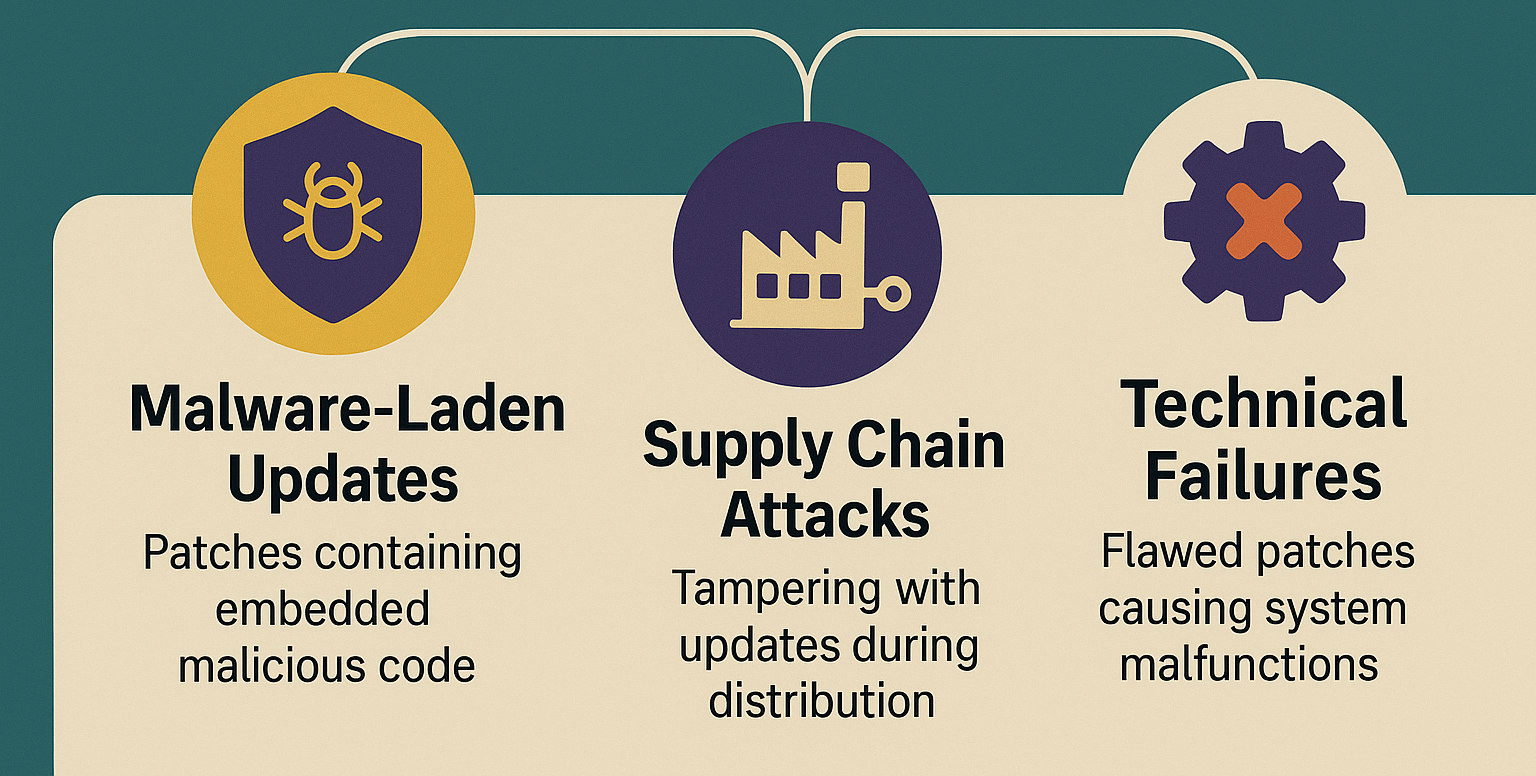
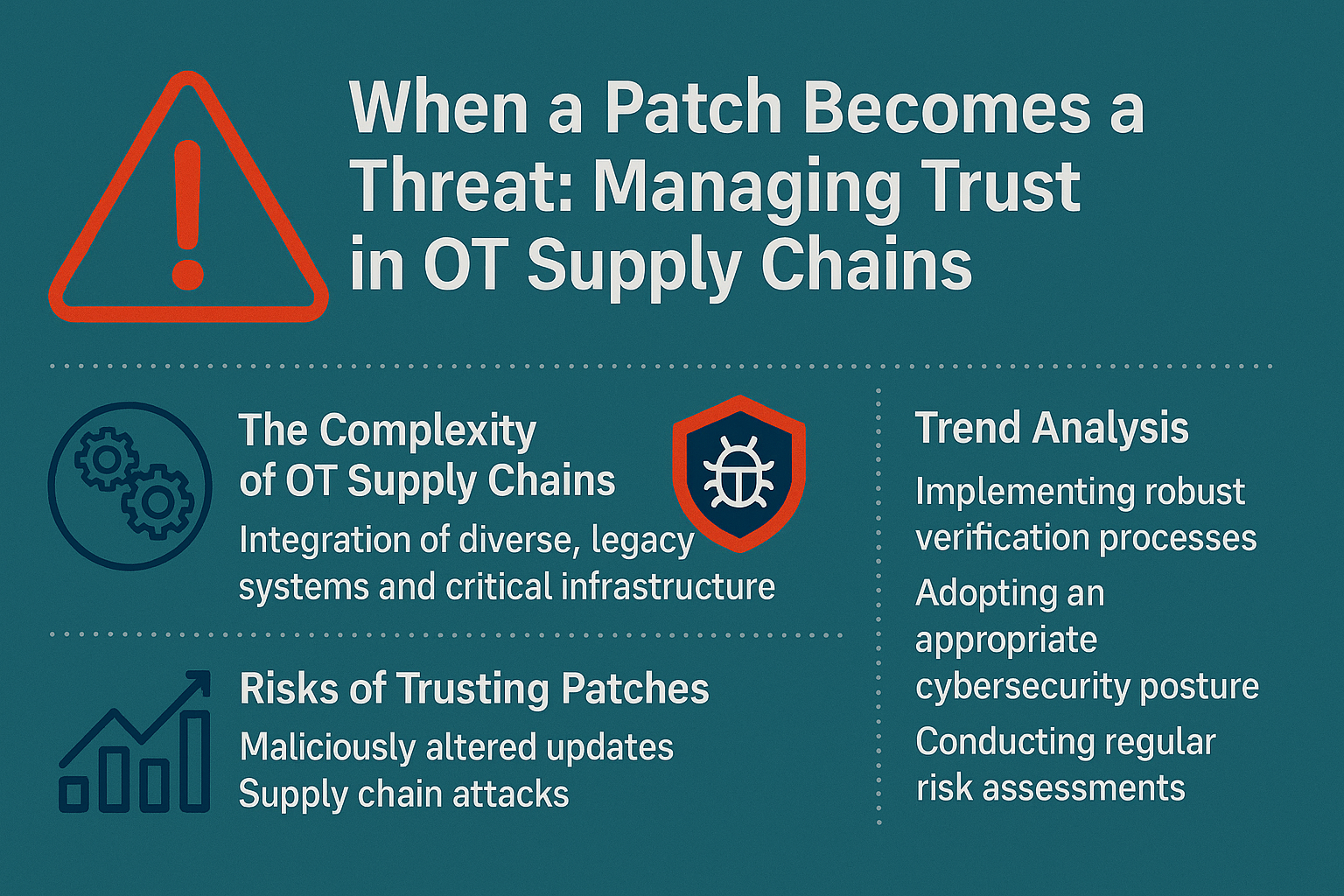
In Operational Technology (OT) environments—spanning critical infrastructure sectors like oil & gas, energy generation, water treatment, manufacturing, and transportation—patching serves as a cornerstone for maintaining safety, reliability, and regulatory compliance. However, the patching process itself is increasingly under threat. A well-intentioned security update can inadvertently open doors to adversaries, especially when embedded within complex supply chain dependencies. This paradox—patches intended to close gaps becoming vectors for compromise—is gaining prominence as supply chain attacks grow more sophisticated and state-level Advanced Persistent Threats (APTs) exploit presumed trust.
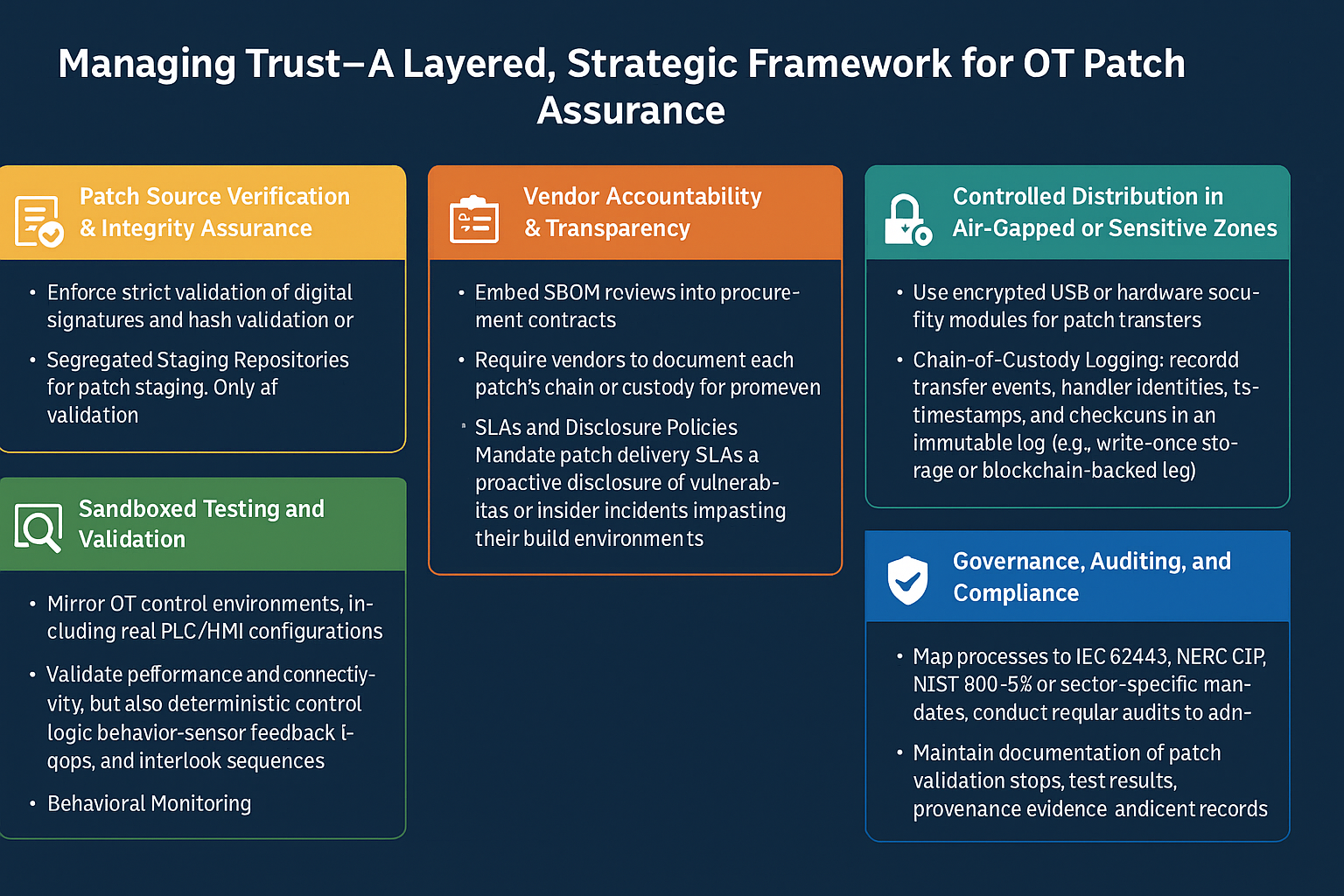
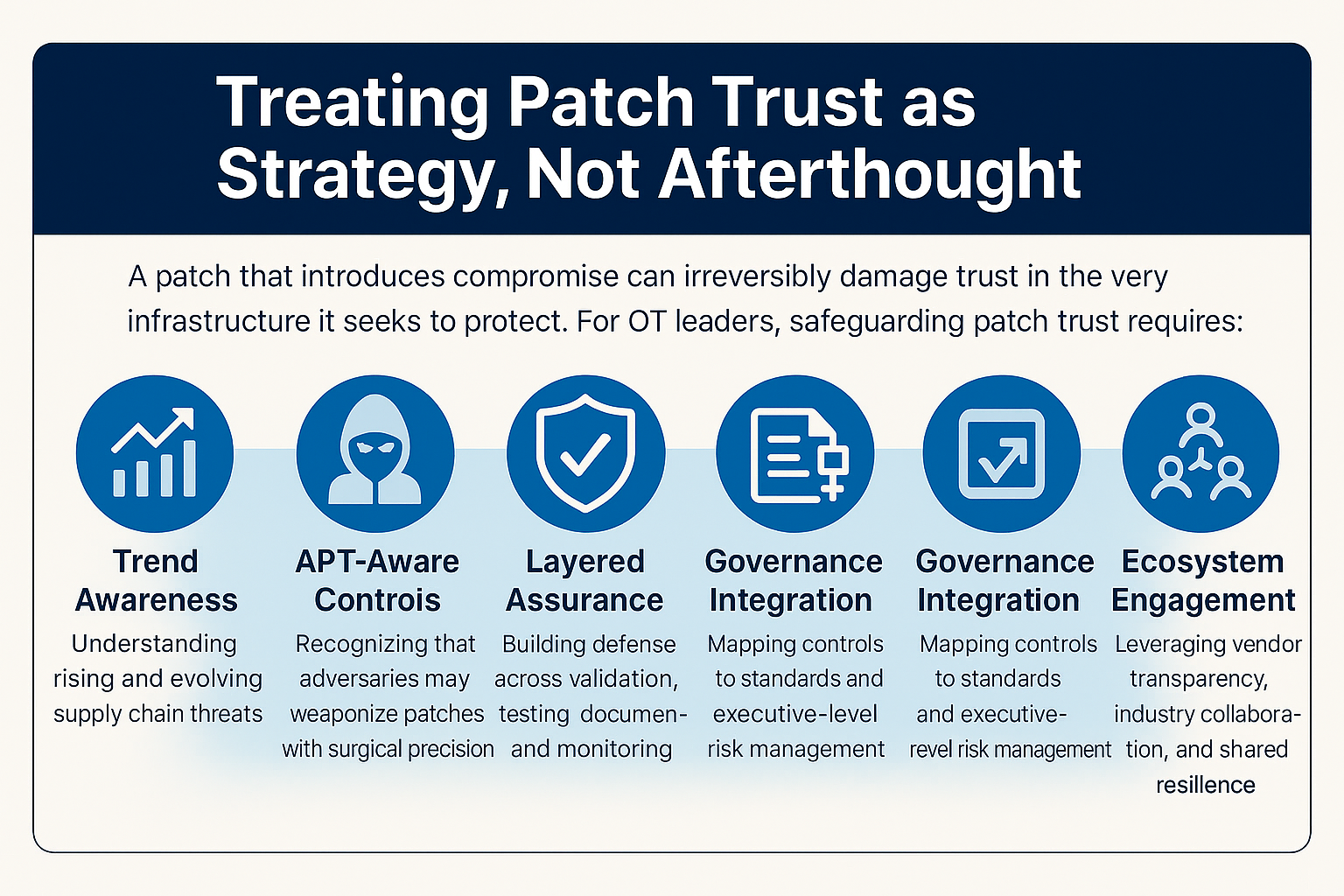
To navigate this landscape, OT stakeholders—asset owners, CISOs, risk managers, and supply chain analysts—need an expanded toolbox: one that includes trend awareness, threat actor profiles, technical controls, and governance frameworks. This article dives deeper into key dimensions of trust in OT patching: evolving supply chain risks, APT-driven exploitation strategies, and a robust, layered defense model ensuring patches truly secure rather than endanger.